
The Illusionist and the Ledger
In the beginning—by which I mean the recent, absurdly well-funded half-decade—computers learned to sound like people. Not because they developed intentions, desires, or a taste for bad coffee, but because we taught them to predict what comes next.
Prediction is the simplest possible magic: given a ledger of what humans previously said, do the statistically most plausible thing next. This is the raison d’être of modern language models. They are consummate pattern-matchers, virtuoso parrot-scholars, and—crucially—obedient to the metrics we choose to measure them by.
That ledger is both sacred and sordid. On one side lies scale: corpora drawn from the internet, books, code, private chats—vast reservoirs of human output. On the other lies mechanism: layers of parametrized functions whose sole training objective is to reduce surprise—mathematically, cross-entropy.
The model is rewarded for reproducing the distribution of tokens it has seen. That reward is blind to truth, provenance, or ethics. It does not care whether the next sentence is beautiful, factual, or catastrophic—only whether it is statistically plausible.
Here lies the central irony: fluency is easily mistaken for comprehension. The more convincing the prose, the less likely a human reader is to interrogate its origin. Eloquence becomes authority by default.
This seduction is ancient—but at scale, it becomes infrastructural. Search engines, legal drafts, medical summaries, and board reports now share the same persuasive veneer. The ledger does not distinguish. Humans must.
Transformers: The Orchestra Pit
The technical revolution behind this illusion was economical and cruelly elegant. The Transformer architecture replaced recursion and convolution with attention—the capacity for each token to attend to every other token with learned weights.
The result was parallelism at scale: models capable of evaluating context across sentences, documents, and books simultaneously. What once required sequential processing became a single sweep of matrix multiplications.
Transformers did not make machines wiser. They made them faster at mimicking wisdom.
Self-attention constructs a numerical map of relevance—softmax-normalized weights computed through ordinary linear algebra. Mundane mathematics, theatrical effect. When prose feels like reasoning, remember: probability is masquerading as thought.
The modern AI playbook is brutally simple:
- Accumulate scale (data and parameters)
- Enshrine attention
- Optimize relentlessly
The output is a machine that compresses the statistical shape of language into parameters so dense that illusion emerges naturally.
Tools, Prompts, and the New Scriptorium
If Transformers are the instrument, prompts are the conductor.
The same model produces radically different outputs depending on framing. Minor lexical changes reshape the probability distribution of the next token. Organizations monetize this sensitivity—entire teams now sculpt prompts because linguistic ergonomics directly translate to economic value.
But this craft reveals a deeper truth: we do not expect models to know. We expect them to be coaxed into usefulness.
The interface between human intent and model propensity is fragile. It rests on statistical imagination, not epistemic certainty.
To compensate, practitioners wrap models with tools—retrieval engines, calculators, symbolic checkers. These turn statistical oracles into applied instruments, but they also expose fragility. An ungrounded model remains dangerously persuasive.
Fine-Tuning, Embeddings, and the Geography of Meaning
Early language models were generalists. Fine-tuning creates specialists—medical, legal, financial—by shifting output distributions toward domain-specific corpora. Yet specialization does not guarantee correctness; it guarantees stylistic alignment.
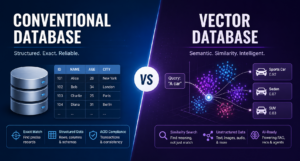
Embeddings complement this process by translating language into geometry. Meaning becomes spatial proximity in high-dimensional vector space. Similarity becomes a dot product.
This abstraction enables semantic search and retrieval at scale—but compression comes at a cost. Nuance collapses into coordinates. Causal distinctions blur.
Engineers must therefore practice disciplined pragmatism: tailor representations to tasks, instrument edge-case checks, and design graceful failure paths. Judgment enters the system through architecture, not aspiration.
Hallucinations, RAG, and the Ethics of Confidence
Hallucination is not a glitch. It is structural.
Optimizing for plausibility rather than truth inevitably produces confident falsehoods. The model prefers fluent certainty to hesitant accuracy.
Retrieval-Augmented Generation (RAG) mitigates this by anchoring outputs to external documents. But RAG introduces its own dependencies—index quality, freshness, and rhetorical alignment between retriever and generator.
Another response is cultivating uncertainty: rewarding abstention, hedging, or escalation. These are not technical tweaks. They are policy decisions.
A system that always sounds certain will be ceded authority. A system that hesitates may be bypassed. Deployment choices determine epistemic norms.
Agents, Multimodality, and the Theater of Action
The frontier now lies in agents—systems that plan, act, call tools, and execute tasks. Capability multiplies; so does risk. Errors compound through action.
Effective agent design therefore binds planning to verification: checkpoints, rollback triggers, and human-in-the-loop control.
Multimodality extends this theater. Text, images, audio, and video collapse into shared representations. Models interpret the world by translating perception into computation.
They are not philosophers. They are interpreters.
Power increases only insofar as supervision, evaluation, and governance keep pace.
The Recurring Theme
Across every layer, one pattern recurs:
Scale buys capability. It does not buy truth.
Data and compute expand possibility space while magnifying bias, hallucination, and misuse. Intelligence—human intelligence—mixes skepticism, empathy, causality, and moral judgment. These are not emergent properties of scale.
They must be engineered deliberately, tested rigorously, and governed transparently.
We are not building enlightenment.
We are building instruments.
And instruments require discipline.
An Elegant Manifesto of AI