For a century, we organised companies on industrial-age assumptions. We divided work into discrete tasks, delegated them to specialised departments, documented every step, escalated issues and hoped for alignment. This model achieved remarkable success – it built railways, airlines, global supply chains and even the foundations of the internet. However, it relied on the assumption that humans were the sole interpreters of context.
When that assumption no longer holds, everything shifts. Artificial intelligence does not merely automate routine tasks; it is a much more complex system. It comprehends context, retains past events and identifies inconsistencies that humans might overlook. It integrates data from multiple systems in seconds and provides insights without requiring manual data analysis. For enterprises today, this is not merely another tool but a paradigm shift in the nature of work.
A New Production Factor: Cognitive Infrastructure
Consider any company we admire: each has mastered a foundational resource before others. Toyota mastered the flow of value in its factories; Amazon excelled in lightning-fast logistics; Netflix captured our attention. The next generation of leaders will master a different resource: cognitive infrastructure. This is the system that carries knowledge, context, memory and reasoning across an entire organisation.
Imagine it as providing your company with a brain. For the first time an enterprise can truly “think” alongside you. Not with a single isolated bot but with a comprehensive suite of intelligence working in concert. Consider today’s AI-powered toolset, which may include a large reasoning model (such as Google’s Gemini), an AI-powered workflow builder (Google Workspace Studio), a live code-documentation engine (CodeWiki), a persistent research notebook (NotebookLM) and even on-device assistants (Gemini Nano). These are not standalone applications but collectively form a nervous system for your business. This is a new kind of infrastructure that industrial-age companies never imagined.
From Process-Driven to Intelligence-Driven Organisations
Many organisations have undertaken digital transformation projects that have yielded limited results. This is because most companies update tools rather than their underlying assumptions. Historically, employees were expected to perform numerous tasks simultaneously, including memorising information, locating documents, interpreting data, coordinating activities, attending meetings and manually documenting their work. These assumptions become unsustainable at scale.
Artificial intelligence (AI) offers a transformative approach. An AI-augmented organisation can:
– Retain information by tracking decisions and history.
– Interpret data through the analysis of reports, conversations and data.
– Summarise complex information into clear insights.
– Monitor projects for potential issues or delays.
– Connect disparate data points.
– Filter and prioritise information.
This shift from asking how to improve processes to what is possible when context is preserved is where true transformation begins.
Knowledge Work Leaks — AI Provides a Solution
Organisations often experience a knowledge leak, losing more information than they create. For example, departing employees take decades of expertise with them, key decisions are lost in chat logs and outdated documents become obsolete quickly. New hires can spend months catching up. Furthermore, critical system details are often confined to a single engineer’s memory.
This creates a slow drain in collective knowledge. While new information is constantly being added, it is not always retained. AI does not eliminate all knowledge gaps but provides a second brain for the enterprise that:
– Captures context in real-time.
– Continuously updates itself.
– Links decisions to their underlying reasons.
– Explains code and policies in accessible language.
– Preserves historical data without overwhelming users.
For example, consider a tool like CodeWiki that generates not only static documentation but continuously tracks the evolving state of a codebase. Alternatively, Workspace Studio could treat every meeting, chat, document and task as structured signals for learning rather than isolated artefacts. Even a research assistant like NotebookLM could become a collective memory anchor, not a place for note-taking but a repository of the team’s knowledge. This is not magic; it is the result of information being retained.
Agentic Workflows: Work That Moves On Its Own
What depletes teams is not the creative aspect of the work but the friction surrounding it. Individuals express dissatisfaction not with problem-solving but with the pursuit of context. Consider the repetitive tasks: locating the correct file version, seeking clarifications, tracking who is obstructing whom, switching between multiple applications, copying updates between tools, requesting approvals, coordinating opinions and filling in gaps of missing context. This is what causes fatigue, not the work itself.
AI agents transform the landscape. They do not eliminate work but eliminate context friction. Imagine instructing the system to:
“Prepare a compliance summary using the last three customer escalations, compare it against our risk matrix and draft remediation steps. Alert the security team only if the severity exceeds threshold B.”
Observe the system’s response. It gathers emails, documents and data, synthesises the relevant information, compiles the summary and only engages human experts when necessary. Humans provide judgement, not drudgery. This is not merely automation (which follows fixed rules); it is interpretation—the computer comprehends your requirements and executes them. Your enterprise becomes an orchestration engine: people define intent, AI handles the routine tasks.
where do humans fit? Higher up—not out.
Yes, where do humans fit? Higher up—not out.
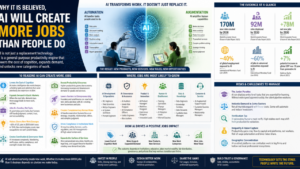
When AI takes on the heavy lifting of context, where do people go? Up. We rise to focus on what machines still struggle with: purpose, ethics, creativity, and connection. Three big roles emerge:
Intent Setters. These are the leaders and visionaries who define direction with clarity and nuance. They set the goals and context — not by micromanaging tasks, but by communicating purpose.
Ambiguity Navigators. These humans handle what AI can’t: empathy, ethics, conflict resolution, negotiation, and decisions under incomplete information. They interpret and adapt when the situation is fuzzy.
System Shapers. These are the architects, designers, product thinkers, and transformation leads who decide how humans and AI interact. They define the guidelines, design the interfaces, and ensure the system as a whole evolves smoothly.
As AI gets smarter, human judgment doesn’t become less valuable — it becomes more precious. We move from brawn to brains.
Engineering Organizations: The Deepest Earthquake
For engineering teams, this shift feels like a seismic event. For years, engineers often had to double as: - Historians, digging through commit logs to guess why something was built a certain way. - Detectives, chasing down elusive bugs and forgotten dependencies. - Archaeologists, deciphering ancient, uncommented code. - Translators, explaining code to non-technical stakeholders. - Librarians, maintaining documentation they never had time to write. - Test runners, executing tedious manual tests. - Documentation clerks, jotting down what they did after the fact.
What a waste. AI swoops in and takes over those chores. Suddenly engineers can ask bigger questions: “Why is this system built this way? What will break if we change this module? Show me every path that leads to this function. Are we following our own architecture principles?” And instead of poking around for hours, they get answers in seconds. When the codebase can effectively explain itself, engineering transforms from a scavenger hunt back into the creative, conceptual discipline it was meant to be.
What Leaders Must Change (This Is the Hard Part)
Let’s be clear: flipping the switch on an AI bot is easy. Changing an organization’s heart and habits is hard. Leaders who want to ride this wave must redesign:
Structure. Tear down rigid silos. Instead of vertical fiefdoms, build cross-functional domains that share a common knowledge backbone. Encourage teams to work in shared models and data layers, not as black boxes.
Governance. Move from rule-checking to agent-assisted oversight. Let AI handle routine compliance checks and flag issues. Human leaders should deal with high-level policy and purpose, not chasing paperwork.
Incentives. Reward clarity and contribution, not gatekeeping. Celebrate people who document insights, share knowledge, and connect dots — not those who just guard information or hoard tasks.
Hiring. Look for integrators, not just coordinators. Seek systems thinkers and problem finders rather than order-takers. Hire people who are comfortable with ambiguity and with teaching the AI, not just people who can follow a script.
KPIs. Track cognitive performance: time to insight, friction removed, decision velocity, knowledge reuse, cross-team alignment — metrics that matter in an intelligence-driven world.
True transformation isn’t a new policy or another org chart. It’s a cultural rewiring. Leaders must have the courage to rethink how work actually flows and what success looks like in this new era.
People Will Resist — And They’re Not Wrong
Behind every big change, there’s fear. People will ask: “Will my work still matter?” “Will the system replace me?” “Will I lose control or influence?” “How will I learn these new tools?” These are valid questions. Leaders need to answer them plainly: “AI isn’t here to replace your value; it’s here to remove the drudgery that blocks your value.”
Training must be human-first. Teach people how to delegate to agents: how to articulate clear prompts and expectations. Show them how to supervise AI: how to check outputs and correct errors. Train them to design workflows with AI in mind: how to break tasks into what the machine can do and what only a human can do. Encourage a mindset of “I can teach this assistant to help me.”
This isn’t the death of work — it’s the return of meaningful work. It’s about moving from typing and searching to thinking and creating.
The Economics of Transformation: Why This Matters
Why push for this change? Because AI-native enterprises will build compounding advantages:
Speed. Decisions and actions accelerate. You catch and act on opportunities before others even spot them.
Capacity. Teams can handle more without burning out. The same people achieve double the impact.
Quality. Fewer errors, because nothing slips through the cracks. Designs and plans are tighter when context is preserved.
Memory. Organizations stop repeating mistakes. Lessons live on, so you don’t pay the same price twice.
Adaptability. The system learns and evolves. Workflows rewire themselves as conditions change; innovation happens continuously.
This isn’t about shaving a few bucks off the bottom line. It’s about competitive survival. The company that masters intelligence-driven work will leave slower, cost-focused rivals behind. It’s about being the fastest, the smartest, the most resilient.
The Enterprise of 2035: A Glimpse Ahead
Picture an organization a decade from now: - Every routine task has an AI agent baked in. - Every meeting automatically turns into structured data and instant summaries. - Every employee carries an AI partner in their pocket, priming them for the day. - Every document updates itself with live data; nothing gets stale. - Every codebase can answer questions about its own architecture on demand. - The whole system remembers everything, so no one has to.
Departments blur into cognitive domains. Work becomes orchestration, not execution. The enterprise thinks as one living organism instead of a puzzle of silos. This isn’t sci-fi — it’s already starting to happen.
Wrap up: We Aren’t Automating Work. We’re Rebuilding the Enterprise.
AI is not just another widget you plug into your company. It’s an invitation: - to reimagine how people collaborate, - to rebuild how decisions flow, - to preserve what organizations learn, - to design work with intelligence baked in from the start.
The real transformation is not technical — it’s conceptual. It’s the shift from asking “How do we automate tasks?” to asking “How do we build an enterprise where humans and AI think together?” That is the future: cognitive, collaborative, fluid. And it begins not with machines — but with the people in this auditorium, right here and now.
Search for :
enterprise transformation using AI
AI-driven enterprise architecture
cognitive enterprise
AI transformation strategy
agentic workflows
enterprise AI adoption
enterprise productivity with AI
organizational intelligence systems
AI operating model
AI in the workplace